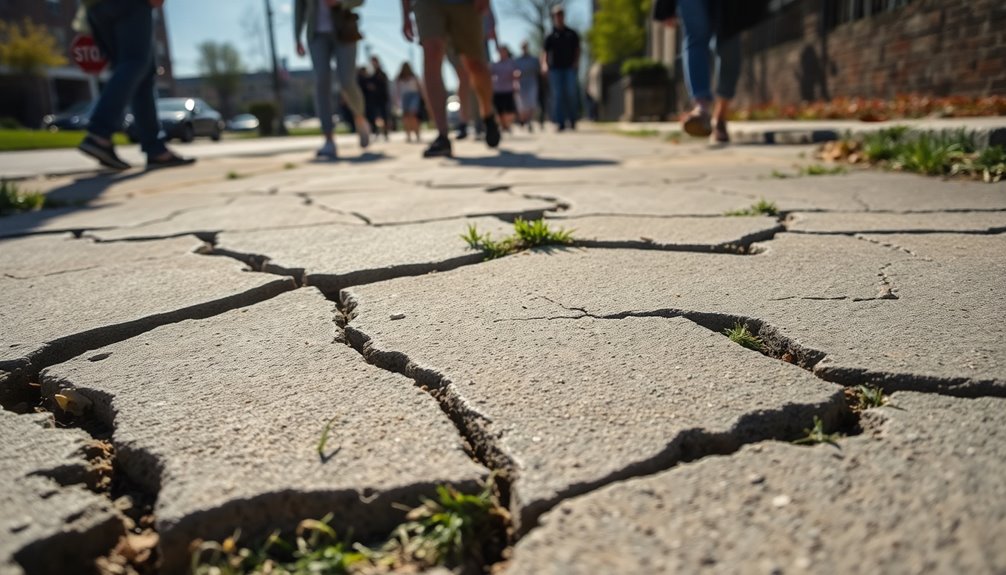
Survey Reveals Public Concern Over Sidewalk Cracks
A recent survey reveals significant public concern over cracked sidewalks. Respondents highlight the safety risks posed by these conditions, especially for pedestrians and individuals using mobility devices. There is a strong demand for local authorities to prioritize repairs and improve pedestrian infrastructure. The survey furthermore underscores the importance of community involvement in addressing these issues and promoting accessibility. To understand how communities can implement effective improvements, more insights on best practices and proposals are available.
Article Highlights
- Recent surveys indicate high public concern regarding sidewalk cracks and their impact on safety and accessibility for pedestrians.
- Cracked sidewalks increase the risk of trips and falls, especially for inattentive individuals and those using mobility devices.
- Community members express a strong desire for local authorities to prioritize sidewalk repairs and improvements for enhanced safety.
- Legal compliance with accessibility standards is critical, as failure to address sidewalk issues can result in negligence lawsuits.
- Engaging the community in reporting sidewalk problems fosters a sense of ownership and accountability for maintenance efforts.
What the Survey Says About Sidewalk Safety
Although many pedestrians may not think about it daily, a recent survey reveals significant public concern regarding sidewalk safety. This survey highlights that public perceptions of sidewalk conditions are not just about functionality but additionally include sidewalk aesthetics. Respondents indicated that well-maintained sidewalks contribute to a community’s appeal, reflecting an organized environment that cultivates pedestrian confidence. Furthermore, participants expressed a desire for local authorities to prioritize repairs and improvements, emphasizing the need for sidewalks that are not just safe but visually pleasing. By addressing these concerns, municipalities can improve both the safety and aesthetic value of sidewalks, aligning with the community’s expectations for enhanced urban infrastructure. In the end, this survey underscores the critical balance between safety and aesthetic considerations in public spaces.
Safety Risks of Cracked Sidewalks for Pedestrians
Though cracked sidewalks may seem like a minor inconvenience, they pose significant safety risks for pedestrians. These cracks can lead to trips and falls, particularly for those who may not be fully attentive to their surroundings. Improved pedestrian awareness is essential in mitigating these risks; individuals must remain vigilant and recognize hazardous conditions. Nonetheless, the burden of ensuring safe walking environments falls on the entire community. Local governments and residents share a collective responsibility to identify and report dangerous sidewalk conditions. By nurturing a culture of accountability, communities can prioritize maintenance and repairs, ultimately reducing the likelihood of accidents. Addressing cracked sidewalks not just improves pedestrian safety but promotes a more walkable and responsible urban environment.
Accessibility Issues for People With Disabilities
Cracked sidewalks present significant accessibility challenges for individuals using mobility devices, such as wheelchairs and scooters. These hazards not only hinder safe navigation but additionally raise concerns regarding compliance with legal accessibility standards. Addressing these issues is vital for ensuring equitable access and safety for all members of the community.
Impact on Mobility Devices
Many individuals who rely on mobility devices face significant challenges due to uneven sidewalks caused by cracks and other surface irregularities. These mobility challenges can severely hinder access to public spaces, limiting the independence and quality of life for those with disabilities. Device accessibility is compromised when pathways are not maintained, forcing users to navigate hazardous terrain or detours. This can lead to increased frustration and a sense of exclusion from community activities. Moreover, inadequate sidewalk conditions may discourage individuals from utilizing their mobility devices altogether, perpetuating a cycle of isolation. Addressing these issues is vital to guarantee that all community members can enjoy equal access to their environment, promoting a more inclusive society.
Safety Hazards and Risks
Sidewalk defects present essential safety hazards for individuals with disabilities, often leading to accidents and injuries. These hazards can result in serious physical consequences, worsening the challenges faced by those who rely on mobility aids. Public awareness of sidewalk conditions is vital for promoting a safer urban environment. Effective urban planning that prioritizes accessibility can considerably reduce risks, ensuring that sidewalks are navigable for all. Communities must advocate for regular inspections and prompt repairs to minimize hazards. By addressing these issues, urban planners can create inclusive spaces, allowing individuals with disabilities to navigate their surroundings confidently. In the end, a proactive approach to sidewalk maintenance improves safety and equality, benefiting the entire community.
Legal Accessibility Standards Compliance
Ensuring compliance with legal accessibility standards is essential for creating safe and inclusive environments for people with disabilities. Failure to address sidewalk cracks can lead to significant legal implications, as municipalities face potential lawsuits for non-compliance. Moreover, compliance challenges arise when balancing budget constraints with the need for accessible infrastructure.
| Compliance Aspect | Legal Implications | Compliance Challenges |
|---|---|---|
| Sidewalk Maintenance | Lawsuits for negligence | Limited funding |
| Accessibility Design | Fines for non-compliance | Technical expertise needed |
| Public Awareness | Community backlash | Resistance to changes |
| Regular Inspections | Liability issues | Resource allocation |
Addressing these aspects is vital for promoting environments that prioritize accessibility and uphold legal standards.
Community Proposals for Safer Sidewalks
Community members have begun to propose various strategies aimed at enhancing sidewalk safety and accessibility. Initiatives focusing on increased engagement with residents and improved maintenance practices are gaining traction. These proposals reflect a collective desire for safer public spaces that accommodate all individuals.
Community Engagement Initiatives
As residents express growing concerns about the safety hazards posed by cracked sidewalks, various community engagement initiatives have emerged to address these issues. One effective strategy involves promoting community partnerships, which enable residents, local businesses, and municipal agencies to collaborate on solutions. Public workshops are being organized to educate citizens about the importance of sidewalk safety and encourage proactive involvement. These workshops provide a platform for residents to voice their concerns, share experiences, and propose actionable measures. Moreover, feedback gathered from these events can be utilized to inform local policies and prioritize sidewalk repairs. By empowering community members to take an active role, these initiatives aim to create safer, more accessible walking environments for all.
Improved Maintenance Strategies
As residents advocate for immediate action on sidewalk safety, improved maintenance strategies have emerged as a vital aspect of community proposals. The implementation of preventive maintenance programs is critical in addressing existing cracks and preventing future damage. By prioritizing regular upkeep, municipalities can improve the longevity of sidewalks, ensuring they remain safe for all pedestrians. Additionally, the integration of proactive inspections allows for the early identification of potential hazards, enabling timely repairs before issues escalate. Community members emphasize the importance of transparent reporting mechanisms, which would empower them to communicate concerns effectively. Such strategies not merely promote safety but also cultivate a sense of community ownership over local infrastructure, ultimately leading to enhanced public confidence in sidewalk conditions.
How Budget Constraints Affect Sidewalk Repair Priorities
Although many municipalities acknowledge the significance of maintaining safe and accessible sidewalks, budget constraints often dictate repair priorities. Limited repair funding forces local governments to allocate resources strategically, frequently sidelining less critical repairs in favor of urgent issues. This prioritization can lead to uneven sidewalk conditions, with some areas receiving timely attention whereas others remain neglected. As a result, public safety and accessibility may suffer, particularly in neighborhoods with fewer financial resources. Citizens increasingly demand transparency in budget priorities, advocating for fair distribution of repair funding to guarantee that all community members benefit from safe pedestrian infrastructure. In the end, addressing budget constraints is crucial for municipalities to improve sidewalk conditions and meet public expectations regarding safety and accessibility.
Best Practices for Improving Sidewalk Conditions
To improve sidewalk conditions effectively, municipalities can adopt a series of best practices that prioritize safety and accessibility. Implementing these practices empowers communities to take control of their pedestrian infrastructure:
- Select Durable Sidewalk Materials: Utilize high-quality, weather-resistant materials to reduce long-term repair needs and improve user safety.
- Establish Regular Maintenance Schedules: Create and adhere to systematic maintenance schedules that involve routine inspections and timely repairs to address cracks and hazards before they escalate.
- Engage the Community: Involve residents in reporting sidewalk issues through user-friendly platforms, nurturing a sense of ownership and accountability in maintaining public walkways.
Frequently Asked Questions
How Can Residents Report Sidewalk Cracks in Their Neighborhood?
Residents can report sidewalk cracks in their neighborhood through various channels. They may contact their local municipal office or use online platforms dedicated to sidewalk reporting. Community involvement is essential; residents are encouraged to organize neighborhood watch groups to collectively monitor and address sidewalk conditions. By actively participating in these efforts, individuals can guarantee that necessary repairs are prioritized, promoting a safer and more accessible environment for everyone in the community.
What Are the Legal Responsibilities of Property Owners for Sidewalk Maintenance?
Property owners bear significant legal responsibilities for sidewalk maintenance, particularly concerning property liability. They are expected to adhere to established maintenance standards, ensuring sidewalks are safe and free from hazards. Failure to maintain sidewalks can result in liability for injuries that occur as a result of neglect. Consequently, proactive management of sidewalk conditions is vital for property owners, as it safeguards public safety and mitigates potential legal repercussions associated with unaddressed maintenance issues.
Are There Any City Programs for Funding Sidewalk Repairs?
Many cities have established sidewalk funding and repair programs to alleviate maintenance burdens. For instance, a city program in Springfield allocated $1 million, likening the repair process to mending a broken bridge that connects communities. These initiatives empower residents, granting them control over their neighborhood’s safety and aesthetics. By tapping into available resources, property owners can address sidewalk issues proactively, ensuring their streets remain accessible and welcoming for all who traverse them.
How Often Are Sidewalks Inspected for Damage in Our Area?
Sidewalk inspection frequency in the area occurs biannually, ensuring a systematic approach to identifying potential hazards. Damage assessment protocols are strictly followed, allowing city officials to evaluate the condition of sidewalks thoroughly. This regular monitoring encourages a sense of control among residents, as they can expect timely interventions for repairs. By adhering to these standards, the city aims to maintain safety and accessibility for all pedestrians, addressing any concerns without delay.
What Should I Do if I Trip on a Cracked Sidewalk?
If someone trips on a cracked sidewalk, they should first assess their safety and check for any injuries. It is vital to report the incident to local authorities to guarantee the sidewalk is repaired, contributing to injury prevention for future pedestrians. Furthermore, documenting the location and taking photos can aid in accountability. Prioritizing trip safety is important, and advocating for timely repairs can help maintain safe walking conditions in the community.