
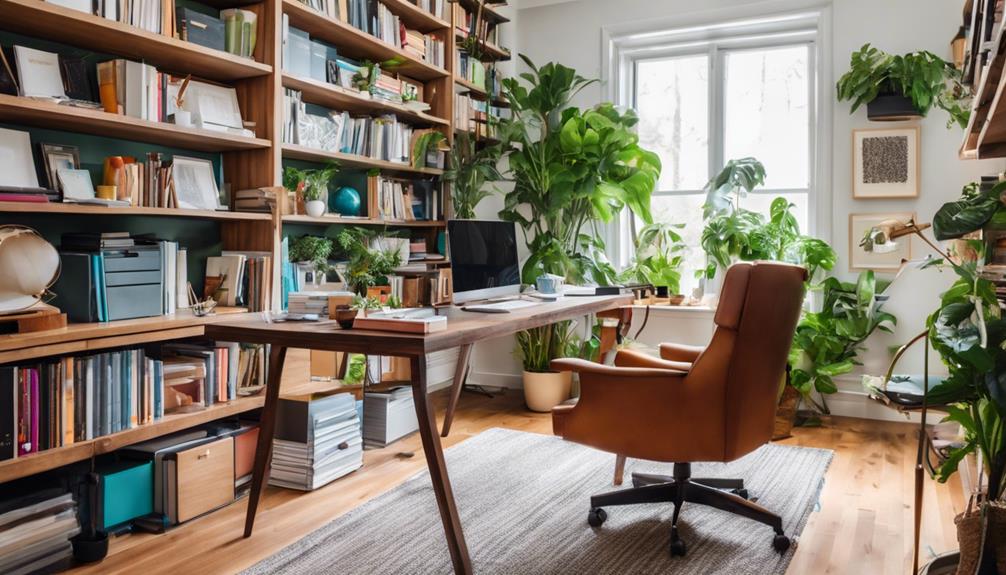
How to Create a Functional and Beautiful Home Office
You’re about to transform a corner of your home into a thriving hub of productivity, where functionality and beauty blend seamlessly to ignite your creativity and motivation. Start by evaluating your workspace needs, considering tasks, equipment, and lighting. Choose a desk and seating that optimize space, prioritize storage, and incorporate ergonomic features. Then, maximize storage and organization with concealed storage and stylish bins. Finally, incorporate natural light sources, tech, and accessories to create a harmonious workspace that inspires productivity. As you continue designing your home office, you’ll uncover the perfect balance of form and function that fuels your success. Personalize the space with artwork, plants, and decorative accents that reflect your style and create an inviting atmosphere. Consider incorporating a cozy reading nook design with a plush chair and soft lighting, providing a comfortable retreat for moments of relaxation or inspiration. By thoughtfully curating each element, your home office will become a space that supports focus, efficiency, and creativity every day.
Assessing Your Workspace Needs
To establish an efficient and effective home office, you need to evaluate your workspace requirements by identifying the tasks you'll be performing and the equipment you'll require. This will help you determine the type of furniture, technology, and overall layout that will best support your work style. Start by making a list of the tasks you'll be doing most frequently, such as writing, video conferencing, or data analysis. Then, think about the equipment you'll need to accomplish these tasks, like a computer, printer, or external monitor.
Next, conduct a lighting assessment to verify your workspace is well-lit and comfortable. Consider the natural light in the room, as well as the type of lighting you'll need for tasks that require focused attention. This will help you decide on the best furniture layout for your space. You'll want to position your furniture in a way that allows for easy movement and minimizes distractions.
When it comes to technology integration, think about how you'll connect your devices and peripherals. Will you need a wireless charging station or a USB hub? Finally, consider the color scheme of your office. Choose colors that inspire creativity, calmness, and productivity. By taking the time to evaluate your workspace needs, you'll be able to create a home office that is both functional and beautiful, allowing you to serve others more effectively.
Choosing the Perfect Desk
As you start selecting the perfect desk for your home office, you'll want to contemplate two critical factors: the size and shape that fits your workspace, and the ergonomic design essentials that promote comfort and productivity. You'll need to ponder how you'll be using your desk, whether you'll be working with multiple monitors or need space for paperwork. By weighing these points, you'll be able to find a desk that meets your unique needs and sets you up for success.
Desk Size and Shape
You'll need to think about the space where your desk will sit and how you'll be using it when deciding on the perfect desk size and shape for your home office. Consider the dimensions of the room, doorways, and any obstacles that might affect the placement of your desk. Think about your work style and the tasks you'll be performing at your desk. Will you need a lot of surface area for papers and projects, or will you be working primarily on a computer?
When it comes to desk material and design, consider the aesthetic you want to achieve in your home office. Do you prefer a modern and sleek look, or a more traditional and rustic feel? Think about the durability and maintenance requirements of different materials, such as wood, metal, or glass. Space optimization is key, so consider a desk with built-in storage or a compact design that won't overwhelm the room. Finally, think about the layout of your desk and how it will fit into your overall workflow. By considering these factors, you can find a desk that meets your needs and enhances your productivity.
Ergonomic Design Essentials
With your desk size and shape in mind, it's time to focus on creating an ergonomic workspace that supports your comfort and productivity. You want a space that allows you to work efficiently without straining your body.
To accomplish this, consider the following ergonomic design essentials:
- Standing desks: Invest in a standing desk or a sit-stand workstation to reap the benefits of alternating between sitting and standing throughout the day. This can help improve your posture, reduce eye strain, and boost energy levels.
- Proper monitor placement: Position your monitor directly in front of you, about arm's length away, and at a height that allows you to gaze slightly downward. This will reduce neck strain and improve your line of sight.
- Task lighting: Make sure you have sufficient task lighting to illuminate your workspace. This can include desk lamps or under-cabinet lighting to reduce eye strain and improve visibility.
- Ergonomic chair: Invest in an ergonomic chair that provides adequate lumbar support, adjustable height, and a breathable fabric. This will help maintain a healthy posture and reduce discomfort during long work sessions.
Selecting Comfortable Seating Options
As you set up your home office, you'll likely spend hours sitting in your chair, so it's essential that you get it right. You'll want to look for ergonomic chair features that support your back and promote good posture. By pairing these features with a desk at the proper height, you'll be well on your way to creating a comfortable and productive workspace.
Ergonomic Chair Features
Selecting the right ergonomic chair features is crucial to creating a comfortable and healthy working environment, especially since you'll likely be spending long hours sitting in it. You want to make sure that your chair provides the support and flexibility you need to stay focused and productive.
Here are some key features to look for in an ergonomic chair:
- Lumbar support: A curved backrest that cradles your spine, promoting good posture and reducing strain on your lower back.
- Adjustable armrests: Armrests that can be modified up, down, and sideways to fit your body and work style.
- Breathable fabric: A mesh or fabric that allows for airflow, keeping you cool and dry even during long work sessions.
- Swivel base: A sturdy base that allows you to easily rotate and move around your workspace.
Proper Desk Height
You've got your ergonomic chair with the right features, now it's time to make sure your desk is at a comfortable height, allowing you to work with your arms at a 90-degree angle and your wrists straight. A desk that's too high or too low can lead to discomfort, fatigue, and even long-term injuries.
| Desk Type | Benefits | Considerations |
|---|---|---|
| Standing Desks | Promotes better posture, increases energy | May require adjustments to workflow, can be costly |
| Adjustable Options | Allows for customization, accommodates multiple users | Can be large, may not be suitable for all spaces |
| Fixed-Height Desks | Often more affordable, simple design | Limited flexibility, may not suit users with varying heights |
| Sit-Stand Desks | Combines benefits of sitting and standing, easy shift | May have limited space for monitors or keyboards |
| Custom Desks | Tailored to individual needs, ideal comfort | Often pricey, may require specialized design |
When choosing a desk, consider your work style, the type of tasks you'll be performing, and your personal comfort preferences. Adjustable options or standing desks can be great choices, but it's essential to weigh the benefits and considerations before making a decision.
Maximizing Storage and Organization
By incorporating smart storage solutions and organizational systems, your home office can transform from a cluttered space to a productive hub. As you aim to create a functional and beautiful home office, maximizing storage and organization is essential to maintaining focus and efficiency.
To achieve this, consider the following ideas:
- Utilize concealed storage: Install shelves, cabinets, or drawers with cleverly hidden compartments to store away important documents, office supplies, and other essentials, keeping your workspace clutter-free.
- Incorporate stylish bins: Use chic and practical bins to store paper, pens, and other office supplies, adding a touch of sophistication to your workspace while keeping items organized.
- Optimize your workstation: Invest in a desk with built-in storage, such as drawers or trays, to keep frequently used items within easy reach.
- Label and classify: Use labels and categories to organize your files, documents, and office supplies, making it simple to find what you need when you need it.
Bringing in Natural Light Sources
When designing your home office, you'll want to think strategically about how to bring in natural light sources. You're likely aware of how much a bright and airy space can boost your productivity and mood. Now, let's explore some effective ways to harness natural light, including making the most of morning sunlight, installing skylights or solar tubes, and using mirrors to reflect light.
Harness Morning Sunlight Effect
Your morning routine gets a productivity boost as the morning sunlight pours into your home office, energizing your workspace. As you start your day, the natural light helps you feel more alert, focused, and motivated. To maximize this effect, consider the following strategies:
- Place your desk near a window, but not directly in front of it, to avoid glare on your screen.
- Opt for sheer window treatments, such as curtains or blinds, to filter the light and reduce harsh shadows.
- Position your furniture in a way that allows you to face the window, but still have a clear line of sight to your computer or workspace.
- Consider a mirrored wall or decorative mirror to reflect the morning sunlight and create the illusion of a larger, brighter space.
Skylights and Solar Tubes
Beyond harnessing morning sunlight, you can bring in natural light from above by installing skylights or solar tubes, which can greatly brighten up your home office. Skylights, especially, offer several benefits, including energy efficiency and a sense of connection to the outdoors. They can also create a sense of openness, making your office feel larger than it actually is. On the other hand, solar tubes are a great option if you're looking for a more cost-effective and low-maintenance solution. Their installation is relatively easy and can be done in a matter of hours. Both skylights and solar tubes can bring in natural lighting advantages, such as reducing the need for artificial lighting and creating a sense of warmth and coziness. This, in turn, can help you create a more inviting and productive workspace. By incorporating natural light sources, you can create an ambiance that not only benefits your own well-being but also fosters a sense of calm and focus, making it easier to serve others through your work.
Mirrors for Reflection
By strategically placing mirrors around your home office, you can cleverly reflect natural light from windows and skylights, amplifying its impact and creating a brighter, more welcoming space. This simple yet effective technique can make a significant difference in the ambiance of your workspace.
Here are some tips to keep in mind for ideal mirror placement:
- Place a mirror opposite a window to reflect natural light and create the illusion of a larger space.
- Use a mirror to bounce light from a skylight onto a specific area, such as a reading nook or workspace.
- Position a mirror near a corner to reflect light from adjacent windows, creating a sense of brightness and airiness.
- Experiment with different mirror shapes and sizes to add visual interest and create a sense of depth in the room.
Adding Decorative Touches Wisely
You'll likely find that adding decorative touches is where your personality can really shine through in your home office. This is your chance to showcase your personal style and create a space that inspires creativity and productivity. To get started, think about the overall aesthetic you want to achieve. Do you prefer a modern and sleek look or a cozy and traditional feel?
When it comes to adding decorative touches, remember that less is often more. Opt for artful arrangements and mindful accents that complement your workspace. A statement piece of art or a vase of fresh flowers can add a pop of color and visual interest to your space. Consider adding stylish decor with functional flair, such as a decorative paperweight or a fun mousepad. These small touches can make a big impact and add personality to your space.
As you add decorative touches, remember to keep your target audience in mind. If you'll be meeting with clients in your home office, you may want to opt for a more professional and neutral aesthetic. On the other hand, if your home office is for personal use only, feel free to get creative and add decorative touches that reflect your personality. By striking the right balance between function and style, you can create a home office that is both beautiful and functional.
Creating a Productive Workflow
Now that your home office is visually appealing, it's time to focus on creating a workflow that maximizes your productivity. As someone who desires to serve others, you understand the importance of managing your time effectively to deliver quality results. To achieve this, you need to optimize your workflow.
Here are some strategies to help you create a productive workflow:
- Prioritize tasks: Identify the most critical tasks that require your attention and tackle them first. This will help you stay focused and guarantee that you're making progress on your most important projects.
- Break tasks into smaller chunks: Large tasks can be overwhelming, but breaking them down into smaller, manageable chunks can make them feel more achievable. This will help you stay motivated and avoid delaying.
- Set realistic deadlines: Don't set yourself up for failure by setting unrealistic deadlines. Be honest about how long a task will take, and leave some buffer time for unexpected interruptions.
- Take regular breaks: Taking regular breaks can help you recharge and come back to your tasks with renewed energy and focus. Use this time to stretch, grab a snack, or chat with a colleague.
Incorporating Tech and Accessories
With your workflow optimized, it's time to equip your home office with the right technology and accessories to further boost your productivity. You'll want to strike a balance between efficiency and aesthetics, ensuring that your space is both functional and visually appealing. This is where smart technology integration and stylish accessory options come into play.
| Tech Essentials | Stylish Accessories |
|---|---|
| High-speed internet router | Desk lamps with USB ports |
| Wireless printer and scanner | Ergonomic keyboard tray |
| Noise-cancelling headphones | Inspirational wall art |
When it comes to smart technology integration, consider investing in modern tech trends like voice-controlled assistants, smart whiteboards, or automated lighting systems. These innovations can streamline your workflow, reduce distractions, and enhance your overall work experience.
Meanwhile, stylish accessory options can add a touch of personality to your home office. From colorful pen holders to geometric-shaped planters, these details can make your space feel more inviting and reflective of your personal style.
Balancing Form and Functionality
As you've curated a selection of tech essentials and stylish accessories, it's time to contemplate how these elements will work together to create a harmonious balance of form and functionality in your home office. This delicate dance between aesthetics and efficiency is vital in creating a space that not only looks beautiful but also boosts your productivity.
When designing your home office, it's essential to prioritize both form and function. You want a space that inspires creativity and motivation, but also provides the necessary tools and storage to get the job done efficiently. Here are some tips to achieve this balance:
- Seek design inspiration: Look to interior design blogs, magazines, or social media for ideas on how to merge form and function. Identify what speaks to you and incorporate those elements into your design.
- Optimize your layout: Consider the flow of your workspace and how you can create a logical and efficient layout that promotes productivity.
- Choose multi-functional pieces: Invest in furniture and decor that serve multiple purposes, such as a storage ottoman or a desk with built-in shelving.
- Consider space-saving solutions: Make the most of your available space by incorporating vertical storage, wall-mounted shelves, or compact furniture designs.
Personalizing Your Home Office
Your home office should reflect your personality, so incorporate personal touches that inspire motivation and make you feel comfortable and focused. This space is where you'll be spending a significant amount of time, so it's essential to make it your own. Start by adding personalized decor that resonates with your style and interests. This could be anything from family photos to artwork or sentimental objects that bring you joy.
In addition to decor, consider a customized layout that caters to your specific needs and work style. If you're a creative, you may want a space with plenty of natural light and a large desk for brainstorming sessions. On the other hand, if you're a numbers person, you may prefer a more structured layout with ample storage for files and office supplies. Whatever your needs, a tailored layout will help you stay organized and productive.
Frequently Asked Questions
Can I Use a Home Office for Both Work and Personal Activities?
Silently, you're seeking a space that seamlessly serves multiple purposes. You wonder, can I use a home office for both work and personal activities? Absolutely! By creating a dual-purpose space, you'll achieve a better work-life balance. Personalize your sanctuary with design aesthetics that reflect your style, and you'll find yourself more productive and inspired.
How Do I Minimize Distractions in a Home Office With an Open Floor Plan?
You'll want to minimize distractions in your open floor plan home office. Start by creating a dedicated workspace with a thoughtful desk layout and feng shui arrangement. Consider using noise-canceling headphones to block out background noise. Add privacy screens to section off your workspace and maintain focus. By incorporating these elements, you'll be able to stay on task and serve others more effectively, even in an open space.
Are Standing Desks Really Better for My Health and Productivity?
You're probably stuck in a sedentary rut, but switching to a standing desk can be a game-changer. On one hand, standing while working can boost your ergonomic benefits, increasing productivity and energy levels. On the other hand, it's not a one-size-fits-all solution; some alternatives, like adjustable desks or balance balls, can offer similar health effects without the steep learning curve.
Can I Claim My Home Office as a Tax Deduction?
You're wondering if you can claim your home office as a tax deduction. The good news is, you might be eligible for some great tax benefits! To qualify, you'll need to use a dedicated space regularly for work. Keep accurate documentation and records of your expenses, including utility bills, equipment, and supplies. Ensure to follow the IRS guidelines to confirm you're eligible for the deduction.
How Do I Keep My Home Office Organized When Sharing With Family Members?
'When in Rome, do as the Romans do' – set clear family boundaries to maintain your home office organization. Designate specific work hours and areas to guarantee a peaceful coexistence. Create a shared workspace schedule to avoid conflicts and respect each other's privacy. Establish designated zones for each family member to keep their belongings, and label storage containers to safeguard a clutter-free environment.


