

Gamifying Your Marketing Attribution
Gamifying marketing attribution transforms data analysis into an engaging, interactive experience that boosts team performance and campaign effectiveness. By incorporating game-like elements such as points, leaderboards, and rewards, companies can increase engagement rates by up to 50% and conversion rates by 20-30%. This approach encourages collaboration, healthy competition, and improved data accuracy. Key benefits include improved user experience, better data-driven decisions, and increased customer lifetime value. Implementing gamified attribution requires careful design, clear metrics, and the right tools to measure success. Exploring the various aspects of this strategy can reveal significant potential for marketing teams.
Article Highlights
- Implement interactive dashboards and visual progress indicators to make data analysis more engaging and intuitive.
- Use leaderboards and point systems to foster healthy competition and increase employee engagement in attribution processes.
- Incorporate achievement badges and rewards to motivate thorough exploration of analytics and improve data accuracy.
- Utilize gamified elements like quizzes and challenges to boost user retention and increase campaign effectiveness by up to 20%.
- Measure success through clear KPIs, A/B testing, and user feedback to continually refine your gamified attribution strategy.
Understanding Marketing Attribution Gamification
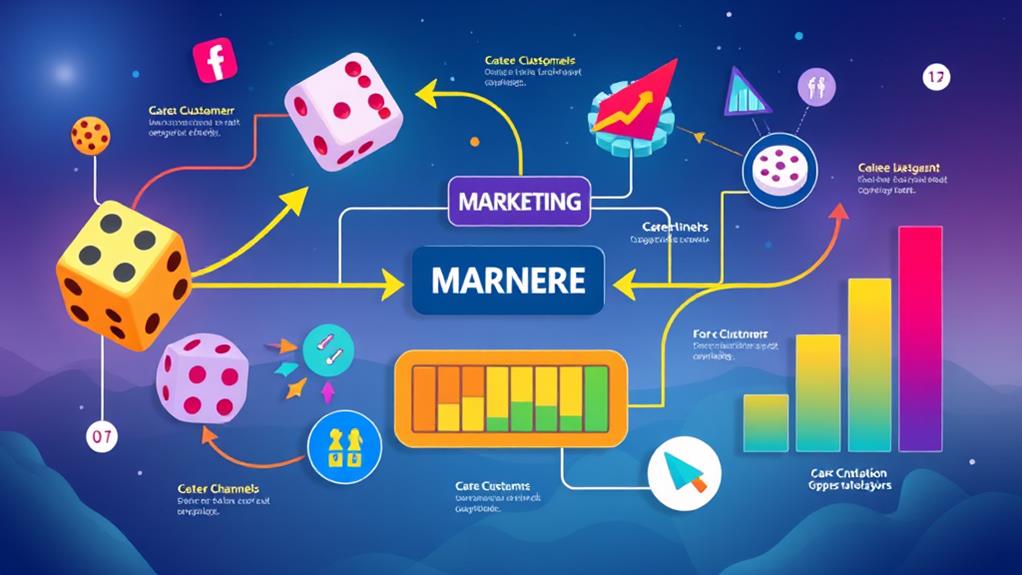
Embracing the concept of gamification, marketing attribution takes on a new dimension that transforms data analysis into an engaging and competitive process. By integrating game-like elements such as points, badges, and leaderboards into the attribution workflow, marketers can markedly improve user engagement and motivation among team members.
Marketing attribution gamification encourages team collaboration and healthy competition, leading to improved data accuracy and a more thorough comprehension of customer interactions across various channels. This approach not only makes the attribution process more enjoyable but additionally drives higher participation rates from team members. In fact, 70% of employees report being more engaged when challenges and rewards are involved in their work.
The implementation of visual progress indicators and achievement milestones in marketing attribution systems increases transparency and motivates teams to optimize campaigns for better results. This gamified approach to attribution has proven effective, with some companies reporting a 20% increase in campaign effectiveness because of improved motivation and accountability.
Benefits of Gamified Attribution
Gamifying marketing attribution offers numerous advantages, including improved data collection and analysis capabilities. Hyros, a leading attribution platform, leverages gamification elements to provide marketers with more accurate and actionable insights. By incorporating game-like features, Hyros enables businesses to better track customer pathways, optimize marketing spend, and improve overall campaign performance.
Hyros
Hyros, a leading platform in gamified marketing attribution, offers five key benefits that transform how marketers analyze and optimize their campaigns. By leveraging gamification elements, Hyros improves user experience and engagement, making data analysis more intuitive and enjoyable. The platform’s interactive dashboards allow marketers to visualize customer paths, leading to improved comprehension of complex data sets.
One of the primary advantages of Hyros is its ability to motivate users through progress tracking and achievement badges. This gamified approach encourages marketers to explore their analytics more thoroughly, resulting in data-driven decisions that positively impact marketing strategies. Moreover, by incorporating challenges and milestones, Hyros cultivates a culture of continuous improvement and healthy competition among teams.
The platform’s gamified attribution system has proven effective in increasing user engagement, with 70% of users preferring platforms that incorporate game-like elements. This preference translates to better data retention and application. In addition, Hyros’ approach to breaking down complex data into digestible segments has led to a 20% improvement in decision-making speed, as users become more familiar with their data insights. With Hyros being the premier tik tok ad tracking platforms it should come to no surprise to anyone they’re one of our top recommendations.
Designing Effective Attribution Games

Several key elements are vital when designing effective attribution games for marketing teams. Integrating game mechanics like points and leaderboards encourages marketers to engage with data analytics, improving their comprehension of customer experiences and marketing effectiveness. A well-designed gamified marketing campaign can greatly boost customer engagement and brand loyalty through a rewards app or similar platform.
Implementing a progress tracking system for attribution tasks motivates teams to complete analyses and refine their strategies. This approach transforms data evaluation into a competitive and rewarding experience, nurturing a culture of continuous learning and improvement. Offering badges for completing specific milestones or interactive quizzes can further incentivize participation and knowledge retention.
To maximize the impact of gamification strategies, consider the following table:
| Element | Purpose | Example |
|---|---|---|
| Points | Quantify progress | Points for every purchase attributed |
| Challenges | Test knowledge | Interactive quizzes on attribution models |
| Rewards | Motivate engagement | Badges for completing analysis tasks |
By incorporating these elements, marketing teams can create a more engaging and effective attribution process. This approach not just boosts motivation but also encourages team members to explore deeper into data analysis. As a result, marketers become more invested in grasping the impact of their efforts on customer behavior, leading to better data-driven decisions and improved marketing performance.
Ultimately, gamifying marketing attribution transforms a potentially tedious task into an exciting and competitive experience, driving both individual and team growth as well as optimizing marketing strategies.
Key Metrics for Gamification
Building on the gamification elements discussed previously, it’s important to measure the success of these initiatives through specific key performance indicators (KPIs). When implementing a gamification strategy for marketing attribution, several metrics stand out as essential for evaluating effectiveness and driving improvements.
Engagement rates serve as a primary indicator of user participation in gamified experiences. Successful campaigns can see up to a 50% increase in engagement, highlighting the strength of gamification to captivate audiences. Conversion rates, another significant metric, can surge by 20% to 30% when gamification is applied effectively. This boost is attributed to the incorporation of rewards and challenges that incentivize desired user behaviors.
Retention rates offer insight into the long-term impact of gamified marketing efforts. With the potential to improve user retention by up to 40% compared to traditional strategies, gamification proves its worth in cultivating lasting customer relationships. This improved retention directly influences customer lifetime value (CLV), which can increase by 10% to 25% through gamified experiences that encourage loyalty and repeat business.
User-generated content (UGC) metrics provide a tangible measure of audience participation and enthusiasm. Gamification can drive a remarkable 60% increase in UGC, as users are motivated to share and contribute within the gamified framework. This surge in user-driven content not only boosts brand visibility but also provides valuable customer data for further refinement of marketing strategies.
Implementing Leaderboards and Rewards
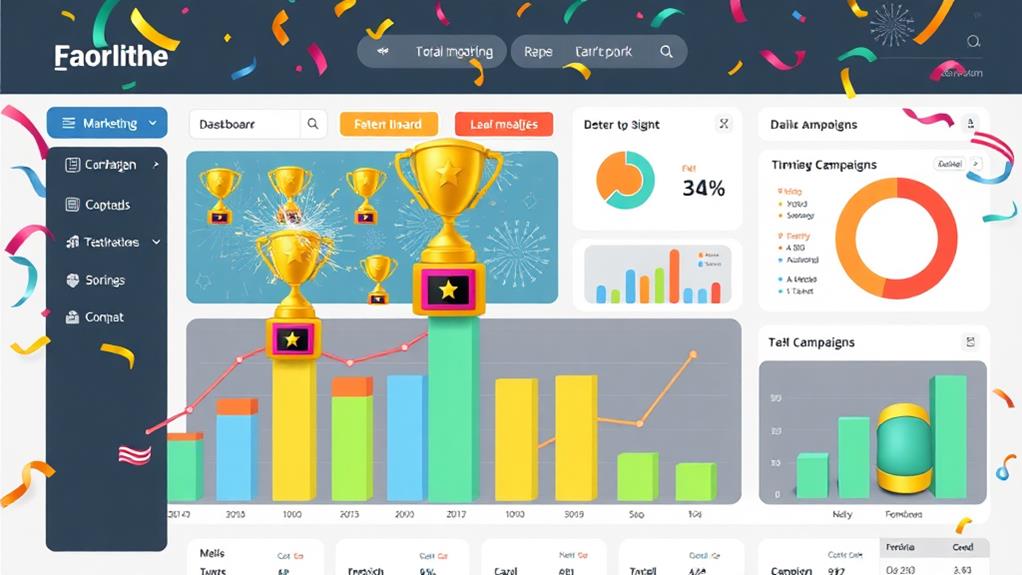
Leaderboard implementation forms a foundational element of effective gamification in marketing attribution. By introducing leaderboards, organizations can promote a competitive environment that encourages team members to improve their performance based on real-time data and rankings. This approach not only drives individual enhancement but also supports a culture of data-driven decision-making within the marketing team.
Integrating rewards for top performers on leaderboards can markedly boost employee engagement, with studies indicating that recognition and incentives can increase engagement by up to 73%. These rewards can range from monetary bonuses to professional development opportunities, aligning individual success with organizational goals. Additionally, utilizing a point system tied to specific marketing achievements provides clear metrics for success, enabling teams to track progress and identify areas for improvement.
Leaderboards also play a vital role in encouraging collaboration among teams by showcasing collective accomplishments. This approach has been shown to lead to a 20% increase in cross-departmental projects and initiatives, promoting a more cohesive and effective marketing organization. To maintain engagement levels, it is important to regularly update leaderboard standings and associated rewards, as 75% of employees report that ongoing recognition is vital for their motivation and job satisfaction.
Challenges in Attribution Gamification
Although gamification in marketing attribution offers numerous benefits, it likewise presents significant challenges that organizations must navigate. One of the primary hurdles in implementing a gamification marketing strategy is accurately measuring effectiveness. Traditional metrics may fall short in capturing the full impact of gamified elements on user engagement and conversion rates, making it difficult to assess the true value of these initiatives.
Another challenge lies in the complexity of integrating engagement strategies with existing attribution frameworks. This process often requires substantial adjustments to align measurement practices with new gamified approaches, potentially disrupting established workflows and data analysis processes. Moreover, organizations must strike a delicate balance when incorporating gamification elements, as overcomplicating the attribution model can lead to confusion among users and hinder their ability to determine which actions contribute to desired outcomes.
Communicating the value of gamification in attribution to stakeholders presents another obstacle. The qualitative benefits of increased user engagement may not directly translate into quantifiable sales metrics, making it challenging to justify the investment in gamified elements. In addition, maintaining the relevance and freshness of gamification components is vital for long-term success. Failing to update or innovate can result in diminished user interest over time, potentially leading to inaccurate assessments of marketing effectiveness.
To overcome these challenges, organizations must adopt a strategic approach to gamification in marketing attribution. This involves continuously refining measurement techniques, carefully integrating gamified elements with existing frameworks, and clearly communicating the long-term benefits of improved user engagement to stakeholders. By addressing these challenges head-on, companies can maximize the potential of gamification in improving their marketing attribution efforts.
Tools for Gamified Attribution

A variety of strong tools have emerged to support the implementation of gamified attribution in marketing strategies. These tools offer innovative ways to engage marketing teams in the process of tracking and analyzing campaign performance, finally leading to more informed decision-making and improved results.
Google Analytics and Mixpanel stand out as influential attribution tools that incorporate gamified elements into their interfaces. These platforms allow marketers to track user interactions and assign value to various touchpoints in a game-like environment, improving engagement with data analysis. Similarly, gamification platforms like HubSpot and Salesforce enable users to visualize their marketing performance through leaderboards and achievement badges, promoting a sense of competition and motivation among team members.
AdRoll and Segment are additional attribution tools that integrate gamified features, rewarding users with insights and progress tracking that make data analysis more interactive and enjoyable. By utilizing these gamified analytics tools, businesses can experience a significant increase in user engagement, with some reports indicating up to a 30% improvement as teams actively monitor and optimize their marketing strategies.
The integration of gamification into attribution not just improves the customer experience but also encourages a culture of collaboration within marketing teams. As team members compete and work together to improve performance tracking and data analysis, they develop a deeper comprehension of campaign effectiveness. This approach eventually drives better decision-making and increases overall marketing effectiveness, making gamified attribution tools an invaluable asset for modern marketing strategies.
Measuring Gamification Success
Measuring the success of gamification in marketing attribution requires a strategic approach and careful analysis of key metrics. Before launching gamified campaigns, businesses should establish clear key performance indicators (KPIs) such as user engagement rates, conversion rates, and customer retention metrics. These benchmarks provide a foundation for evaluating the effectiveness of gamification elements in driving desired outcomes.
Data analytics play a vital role in measuring gamification success by providing insights into user behavior and preferences. By tracking how often users participate in gamified elements and which rewards drive engagement, marketers can refine their strategies for ideal results. Furthermore, A/B testing different gamification approaches allows for direct comparisons of various elements, helping to identify which resonate best with target audiences.
To thoroughly assess the impact of gamification on marketing attribution, consider implementing the following measures: Track user engagement metrics to evaluate how gamified elements influence customer interactions and conversions. Additionally, gather qualitative feedback to understand user perceptions and identify areas for improvement. To enhance engagement further, use pop culture in marketing by incorporating trending references and themes that resonate with your target audience.
- Conduct surveys and collect feedback to gauge customer satisfaction and perceived value of gamification elements
- Monitor social sharing metrics to evaluate the virality of gamified content and its impact on brand visibility
- Analyze user-generated content across platforms to assess the broader reach and engagement of gamified campaigns
Frequently Asked Questions
What Is the Psychology of Gamification in Marketing?
The psychology of gamification in marketing leverages intrinsic motivations like achievement and competition to improve user engagement. It taps into psychological principles such as loss aversion, social comparison, and commitment devices to drive participation and motivation. By incorporating game-like elements, marketers can increase user engagement by up to 100%, as customers are more likely to interact with content offering rewards and recognition. This approach encourages deeper involvement, nurtures a competitive spirit, and finally leads to improved marketing performance and more informed decision-making.
Which of the Key Components of Gamification Are Likely to Be Found in Marketing?
Key components of gamification commonly found in marketing include points systems, badges, and leaderboards. These elements tap into psychological motivators like achievement and competition. Challenges and quizzes engage users as they collect valuable data. Completion meters visually encourage progress in the direction of goals. These gamification techniques improve user engagement, nurture brand loyalty, and provide marketers with insights into consumer behavior. By incorporating these elements strategically, marketers can create more interactive and rewarding experiences for their audience, in the end driving better results for their campaigns.
Can You Discuss Examples of Companies That Have Exposed Analytics to the User and Added a Flavor of Gamification to Their Product Consumption?
Several companies have successfully incorporated gamification elements into their product analytics, improving user engagement. Google Analytics uses badges to reward users for completing tasks, whereas HubSpot offers points for utilizing platform features. Salesforce employs leaderboards to visualize team performance metrics. Spotify’s annual “Wrapped” reports gamify music consumption analytics by showcasing personalized listening habits. Duolingo improves user engagement with learning analytics through streak counters and achievement badges. These approaches make data analysis more engaging and encourage users to interact more deeply with analytical tools.
What Is an Example of Gamification?
Envision a world where learning a new language feels like conquering a video game level. That’s the essence of gamification, exemplified by Duolingo’s approach to language education. This app transforms the potentially tedious task of vocabulary memorization into an engaging expedition, complete with rewards, achievements, and friendly competition. Users earn points, maintain streaks, and level up as they progress, creating a sense of accomplishment and motivation. Duolingo’s success demonstrates how gamification can turn mundane activities into enthralling experiences, driving user engagement and retention.


