
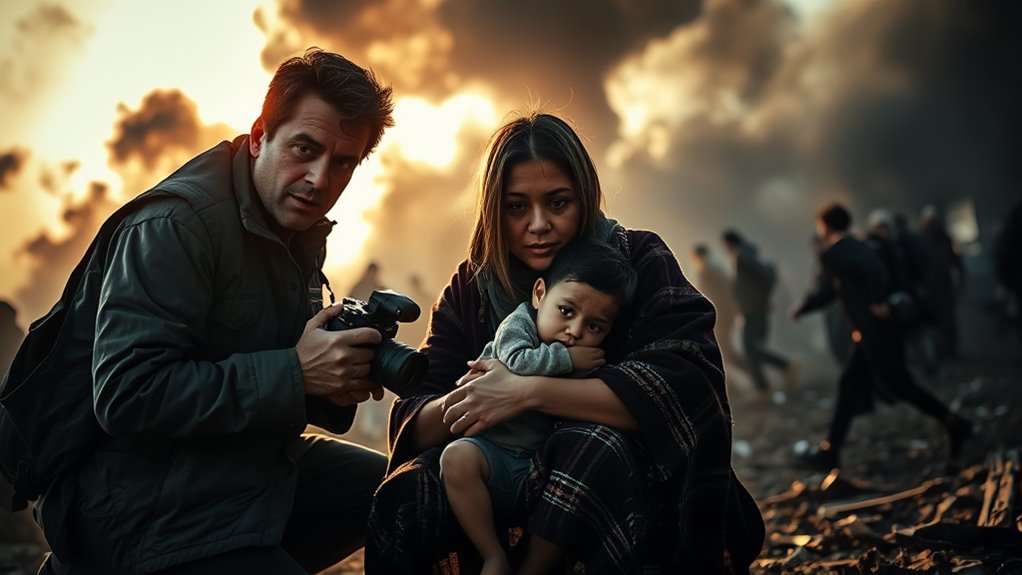
How Journalists Cover Conflicts With Accuracy and Fairness
Journalists cover conflicts with accuracy and fairness by adhering to ethical standards and employing rigorous fact-checking processes. They prioritize diverse perspectives to present a well-rounded narrative, ensuring that multiple voices are heard. Verification techniques, including cross-referencing sources and evaluating credibility, help mitigate misinformation. Cultural sensitivity and historical context are crucial in accurately representing complex issues. In spite of challenges like rapid misinformation and pressure to report quickly, responsible journalism practices promote informed public discourse and build trust. Comprehending these principles not only improves conflict reporting but also reveals deeper insights into the challenges journalists face in their pursuit of truth.
Understanding Conflict Reporting
Comprehending conflict reporting requires a nuanced approach that balances factual accuracy with the intricacies inherent in violent situations. Journalists must navigate complex conflict dynamics, where the interplay of various actors, motivations, and historical contexts shapes the narrative. Reporting on conflicts is not merely about relaying events; it involves interpreting the underlying factors that contribute to violence and discord.
Media framing plays a pivotal role in how conflicts are perceived by the public. The choices journalists make in selecting which aspects of a story to highlight can greatly influence audience comprehension. For instance, framing a conflict as a struggle between "good" and "evil" can polarize opinions, whereas a focus on the humanitarian impact can encourage empathy and awareness. This underscores the responsibility journalists hold in shaping public discourse around sensitive issues.
Moreover, the immediacy of news in a conflict zone often leads to challenges in verifying facts. Journalists are tasked with sifting through a myriad of information sources, which can include government statements, eyewitness accounts, and social media reports. Each piece carries a potential bias that demands critical evaluation.
The Importance of Accuracy
Accuracy stands as a cornerstone in conflict reporting, where the stakes are often extraordinarily high. In situations marked by tension and volatility, the potential for misinformation can exacerbate conflicts, leading to dire consequences. Journalists face numerous accuracy challenges, such as swiftly changing situations, limited access to reliable sources, and the pressures of producing timely content. Each of these factors can compromise the integrity of the information conveyed, making it crucial for reporters to prioritize accuracy in their work.
To illustrate the critical nature of accuracy in conflict reporting, consider the following table:
| Accuracy Challenges | Impact on Reporting | Accuracy Consequences |
|---|---|---|
| Limited access to sources | Incomplete or biased narratives | Misinformation dissemination |
| Fast-paced environments | Errors in reporting timelines | Escalation of conflicts |
| Pressure for quick publication | Oversight of critical details | Loss of public trust |
The consequences of inaccurate reporting can extend far beyond the immediate audience, influencing public perception and potentially aggravating tensions between conflicting parties. Misinformation can fuel propaganda, incite violence, and undermine efforts for resolution. Consequently, journalists must navigate these challenges with a commitment to thorough fact-checking and ethical standards, ensuring that their reports contribute to informed discourse rather than chaos. By emphasizing accuracy, journalists can play a pivotal role in nurturing comprehension and dialogue amidst conflict.
Ethical Considerations in Journalism
Ethical considerations in journalism are paramount when covering conflicts, as they directly impact the integrity of the information presented. Key aspects such as truthfulness and accuracy, balance and impartiality, and rigorous sourcing and verification must guide journalists in their reporting. By adhering to these principles, journalists can nurture trust and credibility as they provide the public with a nuanced comprehension of complex situations.
Truthfulness and Accuracy
In the domain of journalism, the commitment to truthfulness and accuracy serves as the bedrock of credible reporting, especially during conflicts. Journalists bear the responsibility of ensuring that their narratives reflect the realities on the ground, which is paramount in times of crisis. This commitment involves rigorous fact verification, a process where information is carefully cross-checked against reliable sources to avoid the dissemination of misinformation.
The stakes are particularly high in conflict situations, where the consequences of inaccuracies can exacerbate tensions and mislead the public. To uphold the integrity of their work, journalists must be diligent in their pursuit of truth dissemination, aiming to present an all-encompassing view of the events as they unfold.
Moreover, the ethical obligation to accuracy extends beyond mere reporting; it encompasses the need to provide context, allowing audiences to grasp the intricacies of the situation. Through steadfast adherence to truthfulness and accuracy, journalists not only fulfill their role as informers but additionally contribute to a more informed society capable of comprehending the nuances of conflict. Such dedication ultimately nurtures trust between the media and the public it serves.
Balance and Impartiality
Ensuring balance and impartiality stands as a fundamental principle in the ethical framework of journalism, particularly in the context of conflict coverage. Journalists are tasked with presenting diverse perspectives to cultivate a thorough comprehension of complex situations. This commitment to balance is indispensable for maintaining journalistic integrity, as it helps to prevent the distortion of facts and reduces the risk of bias in reporting.
In a setting often fraught with polarization, media transparency plays a significant role in achieving this balance. By openly disclosing sources, methodologies, and potential conflicts of interest, journalists can improve their credibility and allow audiences to assess the reliability of the information presented. This transparency is not merely a best practice; it is a crucial component of responsible reporting that contributes to a more informed public.
Moreover, working for impartiality involves recognizing and mitigating personal biases that may inadvertently influence coverage. Journalists must critically reflect on their perspectives and commit to an ethical approach that prioritizes fairness over favoritism. In the end, the pursuit of balance and impartiality upholds the principles of effective journalism and serves to empower audiences with the knowledge necessary to engage in informed discourse.
Sources and Verification
A multitude of factors highlight the importance of reliable sources and thorough verification in journalistic practice, especially when covering conflicts. The stakes are particularly high in such volatile environments, where misinformation can exacerbate tensions and lead to real-world consequences. Journalists must prioritize source reliability to guarantee the information they disseminate is accurate and trustworthy.
Verification processes serve as the backbone of ethical journalism. These processes involve cross-checking facts, corroborating information with multiple sources, and employing critical thinking to assess the credibility of claims. In conflict situations, journalists often encounter a range of narratives, each with its own biases and agendas. Hence, rigorous verification becomes crucial to separate fact from fiction.
Furthermore, the responsibility of journalists extends beyond mere reporting; they must likewise consider the potential impact of their narratives on affected communities. By adhering to strict standards of source reliability and employing robust verification processes, journalists can promote a more informed public discourse. In the end, the commitment to accuracy and fairness not only improves the integrity of journalism but also contributes to a more nuanced comprehension of complex conflicts.
Balancing Perspectives
Amid the chaos of conflict, journalists face the critical task of balancing perspectives to provide a thorough narrative. Achieving this narrative balance is crucial not just for accurate reporting but also for cultivating comprehension among audiences with diverse viewpoints. Perspective diversity enriches the story and allows readers to grasp the intricacies of the issues at hand.
To illustrate the importance of balancing perspectives, consider the following table:
| Perspective | Significance |
|---|---|
| Victims' Voices | Humanizes the conflict, showcasing personal stories and suffering. |
| Government Stance | Offers insight into political motivations and official narratives. |
| Activist Insights | Highlights calls for justice and change, reflecting grassroots movements. |
| International Views | Provides context on global implications and reactions to the conflict. |
By incorporating various viewpoints, journalists create a multi-faceted comprehension of the conflict. This approach not just respects the intricacy of the situation but also acknowledges the validity of different experiences and opinions. Striking a balance among these perspectives guarantees that reporting does not skew in favor of any particular bias, allowing for a more equitable representation of the truth.
In a setting where narratives can be easily manipulated, the responsibility of journalists to maintain perspective diversity is paramount. Their commitment to narrative balance cultivates a more informed public, enabling individuals to engage thoughtfully with the intricacies of conflict.
Fact-Checking Techniques
In the domain of conflict reporting, fact-checking techniques are crucial for maintaining credibility and accuracy. Journalists employ strategies such as cross-referencing sources, verifying information authenticity, and utilizing specialized fact-checking tools to guarantee the integrity of their narratives. These practices not solely improve the reliability of the information presented but additionally cultivate trust among audiences.
Cross-Referencing Sources
During the reporting on conflicts, journalists must prioritize accuracy by carefully cross-referencing sources to verify information. This crucial practice involves comparing details from multiple sources to assess their credibility and reliability. By evaluating source reliability, journalists can discern which accounts are more trustworthy and which may be influenced by bias or misinformation.
Cross-referencing serves as a robust mechanism for verifying statements made by various parties involved in a conflict. For instance, when a journalist encounters conflicting reports about an event, they should seek additional corroboration from independent sources, such as eyewitnesses, official documents, or reputable organizations. This not merely improves the credibility of the reported information but also helps to provide a more nuanced comprehension of complex situations.
Moreover, journalists should be vigilant about the motivations behind their sources. Grasping the context in which information is presented can illuminate potential biases that may distort the truth. In the end, the commitment to cross-referencing sources is a cornerstone of journalistic integrity, ensuring that the narratives constructed during conflicts are both accurate and fair, thereby promoting a well-informed public.
Verifying Information Authenticity
To guarantee the accuracy of information reported in conflict scenarios, journalists must implement rigorous fact-checking techniques. Information verification is essential in ensuring that the narratives presented are grounded in truth and not influenced by bias or misinformation. Journalists should begin by scrutinizing the credibility of their sources. Evaluating source credibility involves analyzing factors such as the source's expertise, track record, and potential biases.
In practice, this might include cross-referencing claims with multiple reputable sources to establish a consensus or identifying primary sources who can provide firsthand accounts of events. Journalists should be cautious of anonymous sources, as they can sometimes obscure the truth.
Additionally, examining the context surrounding the information is fundamental, as grasping the circumstances can illuminate underlying motives that may skew reporting. This all-encompassing approach to information verification not only improves the reliability of reported facts but also cultivates trust among audiences. Ultimately, committing to these fact-checking techniques will empower journalists to present a more accurate and fair depiction of conflicts, thereby fulfilling their ethical responsibility to inform the public.
Utilizing Fact-Checking Tools
Effective fact-checking extends beyond traditional methods, incorporating various tools intended to improve the verification process in conflict reporting. Journalists increasingly rely on digital verification tools to guarantee accuracy, especially in high-stakes environments. These tools facilitate the swift assessment of claims and the authenticity of sources, which is vital during conflicts where misinformation can spread swiftly.
| Tool Name | Purpose | Key Features |
|---|---|---|
| ClaimBuster | Identifies factual claims | Automated claim detection |
| InVID | Verifies images and videos | Source identification |
| FactCheck.org | Provides thorough fact-checks | Extensive database of claims |
Utilizing these fact-checking tools empowers journalists to not just confirm the veracity of information but likewise to uphold the integrity of their reporting. By integrating digital verification into their workflows, reporters can engage more effectively with the intricacies of conflict reporting, guaranteeing that their audience receives accurate and fair narratives. Emphasizing the importance of such tools eventually serves the dual purpose of enhancing journalistic credibility and combating the spread of misinformation.
Avoiding Bias and Misinformation
Five key strategies can help journalists maintain objectivity and prevent the spread of misinformation when covering conflicts. First, journalists must prioritize media literacy, both for themselves and their audience. Comprehending how media operates and recognizing different types of misinformation campaigns can empower journalists to discern credible sources from dubious ones.
Second, thorough research is fundamental. Journalists should verify information through multiple reliable sources before publishing. This diligence helps mitigate the risk of disseminating false narratives that can exacerbate conflict situations.
Third, employing a diverse range of sources is vital. Including voices from various perspectives not just enriches the reporting but additionally helps to counteract the potential for bias. This diversity cultivates a more nuanced comprehension of the conflict, offering audiences a fuller picture.
Fourth, journalists should be transparent about their methodologies and decision-making processes. By openly sharing how they gather information and select sources, they build trust with their audience and demonstrate a commitment to fairness.
Finally, ongoing engagement with the audience can improve media literacy. Journalists should encourage discussions around misinformation and provide tools for readers to critically analyze news reports. This approach not merely informs the public but also creates a more discerning audience capable of recognizing and questioning misinformation.
The Role of Sources
A diverse array of sources is vital in conflict reporting, as it guarantees a more thorough grasp of the complex dynamics at play. Journalists must seek information from multiple perspectives to create a balanced narrative and avoid presenting a one-sided view. This diversity not only enriches the story but also boosts the credibility of the information being reported.
Source credibility plays a key role in determining the reliability of the information provided. Journalists must assess the background and expertise of their sources to guarantee they are delivering accurate and trustworthy content. Engaging with sources who have firsthand experience or specialized knowledge about the conflict can greatly uplift the quality of reporting. These sources might include local residents, experts, governmental officials, and representatives from various organizations.
Moreover, embracing source diversity can help identify underlying factors contributing to the conflict. For instance, including voices from various ethnic, political, and socioeconomic backgrounds can reveal the multifaceted nature of the situation, nurturing a deeper comprehension among audiences.
However, it is vital for journalists to navigate the challenges associated with sourcing in conflict zones, where misinformation can easily proliferate. By critically evaluating the credibility of their sources and working towards diverse representation, journalists can construct narratives that are not only accurate but also reflective of the complexity inherent in conflicts. This commitment to sourcing ultimately boosts the integrity and impact of journalistic work in times of turmoil.
Contextualizing the Narrative
Contextualizing the narrative in conflict reporting requires a thorough comprehension of historical backgrounds that shape current events. It furthermore necessitates the inclusion of diverse perspectives to capture the multifaceted nature of the situation. Moreover, awareness of cultural nuances greatly enriches the storytelling, allowing for a more nuanced and accurate portrayal of the conflict.
Historical Background Importance
Grasping the historical background of a conflict is vital for journalists seeking to provide a thorough narrative. Comprehending the historical context allows reporters to frame current events within a continuum of past events, decisions, and societal shifts. As media evolution continues to shape how stories are told, it is important for journalists to connect contemporary issues with their historical roots to avoid presenting a distorted view of reality.
| Historical Context | Impact on Current Conflict |
|---|---|
| Colonialism and its aftermath | Ongoing ethnic tensions and territorial disputes |
| Cold War ideologies | Influence on regional alliances and hostilities |
| Economic disparities | Fueling unrest and grievances among marginalized populations |
These historical layers inform both the facts of a conflict and the emotions and motivations of its participants. By integrating this depth of comprehension into their reporting, journalists can cultivate a more informed audience, enabling them to grasp the intricacies of modern conflicts and the factors that drive them. In the end, this enriches the media environment, ensuring that narratives are both accurate and enlightening.
Diverse Perspectives Inclusion
Incorporating diverse perspectives is essential for journalists aiming to convey a thorough comprehension of conflicts. By actively seeking out and including diverse voices, reporters can craft inclusive narratives that reflect the complexity of human experiences. This approach not merely enriches the story but additionally cultivates a deeper awareness among audiences who may be affected by or interested in the conflict.
Diverse perspectives allow journalists to highlight the multifaceted nature of conflicts, revealing the motivations, concerns, and backgrounds of various stakeholders. For instance, interviewing local community members, activists, and experts can provide insights that challenge dominant narratives often portrayed in mainstream media. This diversity helps to illuminate the nuances of each situation, portraying a more accurate picture of the realities on the ground.
Moreover, inclusive narratives can counteract biases that may arise from a singular viewpoint, encouraging empathy and dialogue among disparate groups. By prioritizing the inclusion of diverse voices, journalists not only improve their storytelling but also contribute to a more informed public discourse, eventually promoting awareness and reconciliation in times of conflict. Through this commitment to diversity, the media can serve as a significant tool for nurturing peace and cooperation.
Cultural Nuances Awareness
Frequently, journalists must navigate the intricate cultural environments that shape conflicts, as grasping these nuances is crucial for accurately representing the narratives involved. Cultural sensitivity plays a significant role in this process, allowing journalists to approach stories with an awareness of the diverse backgrounds and experiences of those involved. Failure to address cultural nuances can lead to misrepresentation and perpetuation of stereotypes, which can further escalate tensions.
To effectively cover conflicts, journalists should consider the following:
- Recognizing Local Customs: Appreciating traditions and practices can aid in respectful reporting.
- Addressing Language Barriers: Engaging interpreters or local experts can help convey messages accurately and avoid miscommunication.
- Acknowledging Historical Context: A comprehension of the historical backdrop can illuminate current tensions and encourage a deeper awareness.
Training and Best Practices
Effective training and best practices are critical for journalists covering conflicts, as they equip reporters with the skills necessary to navigate the intricacies and dangers inherent in such environments. Thorough journalist workshops play an important role in this training, providing fundamental knowledge on conflict dynamics, cultural sensitivity, and ethical reporting standards. These workshops often include expert-led discussions and interactive sessions aimed at improving comprehension of the local context and the potential repercussions of reporting on sensitive issues.
Reporting simulations are another important component of training, allowing journalists to practice their skills in a controlled environment. These simulations can replicate real-life scenarios, enabling reporters to develop their ability to think critically under pressure, make ethical decisions, and conduct interviews while maintaining a level of safety for themselves and their sources. By engaging in these realistic exercises, journalists can refine their approaches to reporting in conflict zones and improve their capacity to convey accurate and fair narratives.
Moreover, ongoing education through mentorship and peer feedback cultivates a culture of continuous improvement among journalists. This focus on best practices not only aids individual reporters but also improves the overall integrity of conflict reporting. Eventually, through effective training and adherence to best practices, journalists can greatly contribute to informed public discourse and promote awareness of complex issues surrounding conflicts, thereby fulfilling their essential role in society.
The Impact of Social Media
The advent of social media has profoundly transformed the environment of conflict reporting, introducing both opportunities and challenges for journalists. The pervasive social media influence allows for the rapid dissemination of information, enabling journalists to reach wider audiences and gather real-time updates from various sources, including eyewitness accounts. Nevertheless, this immediacy brings the risk of digital misinformation, which can greatly distort the narrative surrounding conflicts.
To navigate these intricacies, journalists must be vigilant and discerning. Key challenges include:
- Verification of Sources: With the flood of information available, distinguishing credible sources from unreliable ones has become increasingly difficult.
- Combatting Misinformation: Journalists face the uphill task of addressing and correcting false narratives that can spread virally, often before they can report on the actual events.
- Ethical Considerations: The pressure to be the first to break a story can compromise journalistic integrity, leading to the dissemination of unverified information.
Despite these challenges, social media furthermore presents unique opportunities for improved engagement with audiences. Journalists can leverage platforms to inform and educate the public, creating a dialogue around intricate issues. By embracing these opportunities while maintaining a commitment to accuracy and fairness, journalists can effectively navigate the evolving environment of conflict reporting in the digital age. As they adapt to this new reality, the importance of responsible reporting has never been more critical in promoting informed public discourse.
Building Public Trust
Building public trust is fundamental for journalists, especially in the context of conflict reporting where skepticism can run high. In an era marked by misinformation and polarized narratives, establishing credibility is indispensable for media professionals aiming to convey accurate and balanced accounts of events. Journalists must actively engage with the communities they report on, cultivating relationships built on mutual respect and comprehension.
Community engagement plays a significant role in this endeavor. By involving local voices and perspectives, journalists not only enrich their narratives but also demonstrate a commitment to representing the intricacies of the human experience in conflict zones. When communities feel heard and valued, they are more likely to trust the media's portrayal of their realities.
In addition to community engagement, transparency initiatives are crucial for building trust. Journalists should openly communicate their reporting processes, including how sources are selected and how information is verified. This transparency allows the public to see the rigorous standards that underpin journalistic work, helping to counteract skepticism.
Moreover, journalists should be willing to acknowledge their own biases and limitations, promoting an environment of accountability. By adopting these practices, media outlets can improve their reputation as reliable sources of information. In a time when the stakes are high, building public trust through community engagement and transparency initiatives is not merely beneficial; it is essential for responsible journalism in conflict reporting.
Frequently Asked Questions
What Are Common Challenges Journalists Face in Conflict Reporting?
Journalists face numerous challenges in conflict reporting, primarily stemming from bias recognition and the emotional impact of violence. The need to remain impartial during conveying the gravity of situations complicates their narrative. Furthermore, the fast-paced nature of conflict environments often leads to incomplete information, further challenging accuracy. Reporters must balance ethical considerations, the potential for sensationalism, and the inherent risks of covering volatile situations, all in the pursuit of informing the public responsibly.
How Do Journalists Handle Conflicting Information From Sources?
In the domain of journalism, conflicting information can be as perplexing as it is prevalent. Journalists must navigate the intricate balance between source verification and the potential for information bias. By rigorously cross-examining sources and employing critical thinking, they endeavor to discern fact from fiction. This diligent approach not solely improves the credibility of their reporting but additionally cultivates an informed public, in the end reinforcing the integrity of the journalistic profession.
What Role Do Visuals Play in Conflict Journalism?
Visuals play an essential role in conflict journalism by enhancing visual storytelling and conveying complex narratives effectively. They have a profound emotional impact, allowing audiences to connect with the human experiences behind the headlines. Photographs, videos, and infographics can evoke empathy, highlight injustices, and provide context that written articles may lack. As a result, well-crafted visuals not only engage viewers but additionally serve to inform and educate them about the realities of conflict situations.
How Can Journalists Protect Themselves in Dangerous Environments?
Journalists operating in perilous environments must prioritize their safety through thorough safety training and the use of appropriate protective gear. Safety training equips journalists with fundamental skills to assess risks, navigate hostile situations, and respond effectively to emergencies. Furthermore, protective gear, such as helmets and body armor, greatly improves physical safety. By combining rigorous training and the right equipment, journalists can better mitigate risks during their vital role in reporting from conflict zones.
What Are the Legal Implications of Conflict Reporting?
As the adage goes, "A word to the wise is enough." In conflict reporting, journalists must navigate complex legal implications, particularly concerning libel laws, which can hold them accountable for inaccuracies that damage reputations. Adhering to ethical standards is vital, as these guidelines not only promote credibility but additionally mitigate legal risks. Comprehending these intricacies guarantees that journalists can report responsibly during protecting themselves against potential legal repercussions.


