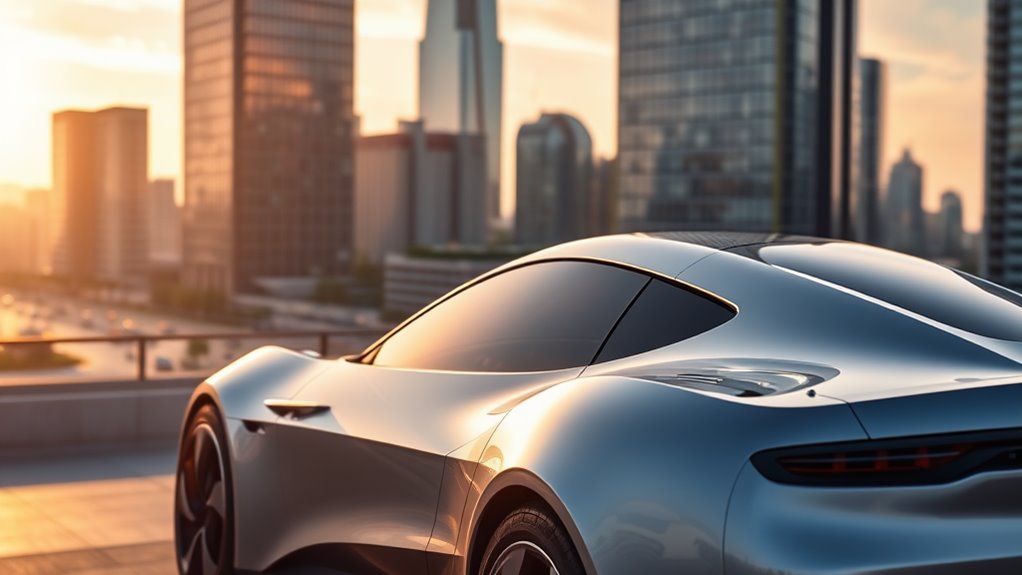
How Electric Vehicles Are Leading the Green Tech Movement
Electric vehicles are driving the green tech movement forward, providing a transformative solution to the environmental and health impacts of traditional fossil fuel-based transportation. By offering zero-emission capability, reducing reliance on finite resources, and minimizing carbon footprints, EVs are redefining sustainable transport. Advances in battery technology, expansion of charging infrastructure, and government incentives are fuelling adoption. As the demand for eco-friendly transportation grows, EVs are positioned as premium, desirable products, emphasizing performance, style, and eco-credentials. As the world shifts in the direction of a cleaner, healthier future, the role of EVs in shaping the green tech environment will only continue to evolve and expand.
EVs: The Zero-Emission Solution
What role can electric vehicles play in reducing our reliance on fossil fuels and mitigating climate change? As the world shifts in the direction of a more sustainable future, electric vehicles (EVs) have emerged as a critical component in the green tech movement. One of the most notable electric vehicle benefits is their zero-emission capability, which eliminates greenhouse gas emissions and air pollutants that contribute to climate change. By moving to EVs, we can greatly reduce our reliance on fossil fuels, decreasing the carbon intensity of our transportation sector.
EVs are energized by sustainable energy sources such as solar, wind, and hydroelectric energy, making them an attractive solution for reducing our carbon footprint. As the grid continues to decarbonize, the emissions associated with EV production and charging will continue to decrease, further solidifying their role in the green tech movement. Additionally, EVs have the potential to act as energy storage devices, feeding energy back into the grid when not in use, thereby stabilizing the electrical supply and promoting grid resilience.
The widespread adoption of EVs is critical to achieving a low-carbon economy. Governments, corporations, and individuals must work together to invest in EV infrastructure, incentivize EV adoption, and promote sustainable energy sources. By doing so, we can reveal the full potential of EVs and accelerate the change to a cleaner, more sustainable future.
Reducing Our Carbon Footprint
How can we effectively reduce our carbon footprint in the face of escalating climate change? The answer lies in adopting a multi-pronged approach that combines innovative technologies with sustainable practices. Electric vehicles, being a fundamental component of the green tech movement, play an essential role in this endeavor. By shifting to EVs, we can considerably decrease our reliance on fossil fuels, thereby reducing greenhouse gas emissions.
However, the battle against climate change requires a more extensive strategy. This is where carbon offsetting initiatives come into play. By investing in projects that promote reforestation, renewable energy, and energy efficiency, we can offset our carbon emissions and support a cleaner environment. In addition, the increased adoption of renewable energy sources, such as solar and wind energy, can drastically reduce our dependence on fossil fuels and lower our carbon footprint.
Alongside these measures, adopting sustainable practices in our daily lives can contribute to a considerable impact. Simple actions like reducing energy consumption, using public transport, and recycling can collectively contribute to a substantial decrease in carbon emissions. By working together to implement these strategies, we can effectively reduce our carbon footprint and mitigate the devastating effects of climate change. The time to act is now, and electric vehicles are leading the charge toward a greener, more sustainable future.
Phasing Out Gas Guzzlers
As I reflect on the role of electric vehicles in the green tech movement, it becomes clear that phasing out gas guzzlers is a vital step toward a sustainable future. The internal combustion engine, a relic of the past, is no longer tenable in an era where climate change and air pollution pose considerable threats to human health and the environment.
Phasing out gas guzzlers is pivotal for several reasons:
- Fuel efficiency: Electric vehicles offer superior fuel efficiency, converting about 60% to 70% of electrical energy into energy at the wheels, during which gasoline-powered vehicles only convert about 20% of the energy in gasoline into energy.
- Alternative energy: Electric vehicles can be powered by alternative energy sources, such as solar or wind energy, reducing our reliance on fossil fuels and mitigating climate change.
- Reduced emissions: Electric vehicles produce zero tailpipe emissions, markedly reducing air pollution and greenhouse gas emissions.
- Increased energy security: By reducing our dependence on fossil fuels, electric vehicles can improve energy security and reduce the impact of price volatility.
The Rise of Sustainable Transport
As the demand for sustainable transportation continues to grow, electric vehicles are poised to play a central role in shaping the future of green tech. With ongoing innovations in battery technology, charging infrastructure, and autonomous driving, the possibilities for electric vehicles are vast and exciting. As the world hurtles in the direction of a cleaner, greener future, sustainable transportation is emerging as a critical component of the green tech movement.
Government Incentives Drive Adoption
Government incentives have played an essential role in driving the adoption of electric vehicles, with tax credits proving instrumental in boosting sales. Moreover, rebates for home charging infrastructure have helped alleviate range anxiety and encouraged consumers to make the switch to electric. In addition, grants for infrastructure development have enabled the widespread rollout of charging stations, creating a supportive ecosystem for the growth of the EV market.
Tax Credits Boost Sales
Incentivization plays a crucial role in driving the adoption of electric vehicles, and government-backed tax credits have proven to be a highly effective catalyst in this regard. By offering tax incentives, governments can encourage consumers to opt for environmentally friendly alternatives, leading to significant sales growth. This approach has been instrumental in propelling the electric vehicle market forward, making it more accessible to a wider audience.
The impact of tax credits on electric vehicle sales cannot be overstated. Consider the following:
- Increased demand: Tax credits have led to a surge in demand for electric vehicles, with many consumers taking advantage of the financial benefits.
- Competitive pricing: The incentives have enabled manufacturers to offer competitive pricing, making electric vehicles more affordable and attractive to consumers.
- Rapid sales growth: Tax credits have contributed to rapid sales growth, with many countries reporting significant increases in electric vehicle adoption.
- Accelerated market development: By driving sales, tax credits have accelerated the development of the electric vehicle market, creating a snowball effect that benefits the entire industry.
Rebates for Home Charging
Beyond tax credits, governments have implemented additional incentives to drive electric vehicle adoption, focusing on another critical aspect of the ecosystem: home charging infrastructure. To alleviate range anxiety and encourage widespread adoption, governments have introduced rebate programs for home charging installations. These rebates greatly reduce the upfront cost of purchasing and installing a home charging station, making electric vehicle ownership more accessible to a broader audience.
In the United States, for instance, the Federal Government offers a 30% tax credit for the installation of a home charging station, up to $1,000. Similarly, several states and utilities offer additional rebates and incentives, ranging from $250 to $500. These rebate programs have proven instrumental in driving the adoption of electric vehicles, as they provide a tangible financial benefit to consumers. By incentivizing home charging infrastructure, governments are creating a conducive environment for the growth of the electric vehicle market, eventually driving the shift to a cleaner, more sustainable transportation sector.
Grants for Infrastructure
As the electric vehicle market continues to gain momentum, a crucial aspect of its growth lies in the development of an extensive charging infrastructure, and governments are playing an important role in this regard. To support the widespread adoption of electric vehicles, governments are offering grant opportunities to encourage infrastructure investment.
These grants are instrumental in driving the growth of the electric vehicle market by providing financial support for the development of charging stations, corridors, and networks. Governments recognize the importance of a robust charging infrastructure in reducing range anxiety and increasing consumer confidence in electric vehicles.
Some key areas of focus for these grants include:
- High-traffic corridors: Grants are being allocated to develop charging infrastructure along highways and interstates, enabling long-distance electric vehicle travel.
- Urban areas: Focus is being placed on building out charging networks in urban centers, where demand for electric vehicles is highest.
- Rural areas: Governments are providing grants to develop charging infrastructure in rural areas, ensuring equal access to electric vehicle technology.
- Public-private partnerships: Grants are being used to facilitate collaboration between government agencies and private companies to accelerate infrastructure development.
Cost Savings Over Time
With the initial higher upfront cost of electric vehicles offset by lower operating expenses, owners can expect to reap significant cost savings over time. A key factor contributing to these long-term savings is the reduced maintenance costs associated with electric vehicles. Fewer moving parts and no oil changes required result in lower maintenance costs, which can add up to substantial savings over the lifespan of the vehicle. Moreover, electric vehicles have fewer components prone to wear and tear, reducing the need for frequent repairs.
Furthermore, electric vehicles offer significant fuel savings, with electricity being a more cost-effective energy source compared to traditional fossil fuels. According to the US Department of Energy, charging an electric vehicle can cost as little as $3 to $5 per 100 miles, whereas gasoline-powered vehicles can cost upwards of $12 per 100 miles. These fuel savings can result in substantial long-term cost reductions, making electric vehicles an attractive option for those seeking to reduce their transportation expenses.
Charging Infrastructure Expansion
As the adoption of electric vehicles continues to accelerate, the expansion of charging infrastructure has become a vital component in supporting widespread adoption. Rapid charging adoption is essential to alleviate range anxiety, with high-power charging stations capable of replenishing batteries to 80% in under 30 minutes. Urban infrastructure development likewise plays a key role, with cities integrating charging stations into existing infrastructure to create a seamless charging experience for drivers.
Rapid Charging Adoption
Rapid charging adoption has been gaining momentum at an unprecedented rate, driven by the pressing need to expand charging infrastructure and support the growing fleet of electric vehicles on the road. As the demand for rapid charging technology continues to rise, companies and governments are investing heavily in the development of high-speed stations that can replenish batteries to 80% in under 30 minutes.
Key factors driving the rapid charging adoption include:
- Increased range anxiety: As more people switch to electric vehicles, the need for reliable and fast charging infrastructure has become paramount.
- Government incentives: Governments around the world are offering subsidies and tax credits to encourage the development of rapid charging infrastructure.
- Competition among automakers: Carmakers are racing to develop their own rapid charging networks, driving innovation and investment in the sector.
- Growing demand from fleet operators: With more companies switching to electric fleets, the need for high-speed charging stations has become a critical factor in their operations.
As the adoption of rapid charging technology continues to accelerate, it's clear that electric vehicles are poised to become an increasingly dominant force in the green tech movement.
Urban Infrastructure Development
Cities' electric vehicle charging infrastructure is undergoing a shift, driven by the necessity to support the escalating number of electric vehicles on urban roads. This shift is vital for facilitating widespread adoption of electric vehicles, which are fundamental to reducing greenhouse gas emissions and mitigating climate change. Urban infrastructure development is, consequently, a significant component of the green tech movement.
To support this growth, cities are investing in smart city integration, which enables the efficient management of charging infrastructure, traffic flow, and energy distribution. This integration additionally facilitates the use of renewable energy sources, such as solar and wind energy, to fuel electric vehicles. Furthermore, cities are implementing innovative charging solutions, including fast-charging corridors and urban charging hubs, to provide convenient and reliable access to charging points.
As the number of electric vehicles on urban roads continues to rise, the development of robust and sustainable charging infrastructure will be vital for supporting the shift to a low-carbon transportation system. By prioritizing urban infrastructure development, cities can create a conducive environment for electric vehicles to thrive, driving the green tech movement forward and paving the way for a cleaner, healthier, and more sustainable future.
EV Battery Technology Advances
EV battery technology has taken a significant leap forward in recent years, driven by intense research and development efforts. This has led to significant improvements in range, efficiency, and cost. Solid-state batteries, in particular, have shown tremendous promise, with the potential to increase energy density by up to 50%. This would enable EVs to travel further on a single charge, making them an even more viable option for consumers.
Several key advancements are driving the rapid progress in EV battery technology:
- Increased investment in R&D: Major players in the industry are investing heavily in research and development, driving innovation and pushing the boundaries of what is possible.
- Improvements in manufacturing processes: Advances in manufacturing have led to significant reductions in production costs, making EV batteries more affordable and accessible.
- Development of new materials: Research into new materials and chemistries is leading to significant improvements in energy density and overall battery performance.
- Closed-loop battery recycling: The development of closed-loop battery recycling systems is reducing waste and the environmental impact of EV battery production.
The implications of these advancements are far-reaching, with the potential to transform the way we think about transportation and energy storage. As EV battery technology continues to advance, we can expect to see even more widespread adoption of electric vehicles, driving the green tech movement forward.
A Shift in Consumer Behavior
As electric vehicles become increasingly viable, a significant shift in consumer behavior is emerging. The growing demand for eco-friendly transportation is driving a fundamental change in consumer preferences, with many opting for sustainable and environmentally responsible options. This shift is largely driven by the increasing awareness of climate change and the desire to reduce carbon footprint.
Consumers are now making eco-conscious choices, prioritizing environmental sustainability in addition to traditional factors such as performance, cost, and convenience. Electric vehicles are seen as a symbol of innovation, modernity, and responsibility, appealing to consumers who value their social and environmental impact. The rise of EVs has additionally led to a greater emphasis on sustainable lifestyles, with consumers seeking to minimize their ecological footprint across all aspects of their lives.
The automotive industry is responding to this shift by investing heavily in electric vehicle technology, design, and marketing. Manufacturers are now positioning EVs as desirable, premium products, emphasizing their performance, style, and eco-credentials. Governments are also supporting this trend, offering incentives and subsidies to encourage the adoption of electric vehicles. As consumer preferences continue to evolve, it is likely that electric vehicles will become the norm, driving a fundamental transformation in the way we think about transportation and our relationship with the environment.
Environmental Impact of EV Production
Production processes have long been a crucial consideration in the broader environmental impact of any product, and electric vehicles are no exception. Although EVs boast a notably lower carbon footprint during operation, the manufacturing process itself presents several environmental concerns.
The EV production process relies heavily on resource-intensive components, such as lithium-ion batteries, which contribute to resource scarcity. Additionally, the mining and extraction of critical materials like cobalt, nickel, and graphite can result in environmental degradation and human rights issues.
Key areas of environmental impact in EV production include:
- Supply chain emissions: The extraction, processing, and transportation of raw materials contribute to greenhouse gas emissions.
- Resource depletion: The high demand for EV batteries drives resource scarcity, exacerbating existing environmental concerns.
- Energy consumption: Manufacturing EVs requires considerable amounts of energy, often generated by fossil fuels, which contributes to emissions.
- Waste generation: The production process generates hazardous waste, including battery waste, which poses environmental and health risks if not disposed of properly.
To mitigate these environmental impacts, EV manufacturers must adopt sustainable practices, invest in renewable energy, and develop closed-loop recycling systems to minimize waste and reduce the strain on global resources. By doing so, the environmental benefits of EVs can be fully realized, paving the way for a more sustainable future.
Electrifying Public Transportation
Several cities around the world are witnessing a notable shift in the direction of electrifying their public transportation systems, driven by the need to reduce greenhouse gas emissions and improve air quality. This change is essential, as traditional fossil fuel-powered buses are substantial contributors to urban air pollution and climate change. Electric bus innovations are revolutionizing public transit electrification, offering a cleaner, quieter, and more efficient alternative. Cities like London, Paris, and Singapore are already making strides in electrifying their bus fleets, with many more following suit.
Public transit electrification is not only environmentally beneficial but equally economically sound. Electric buses require considerably less maintenance compared to their diesel counterparts, resulting in reduced operating costs. Furthermore, electric buses can be powered by renewable energy sources, further decreasing their carbon footprint. Governments and private companies are investing heavily in electric bus infrastructure, with many cities committing to fully electrify their fleets within the next decade.
As the demand for electric buses continues to grow, manufacturers are responding with innovative solutions. Advances in battery technology have increased the range and efficiency of electric buses, making them a viable option for cities of all sizes. With public transit electrification gaining momentum, the future of urban transportation is looking increasingly green.
A Cleaner Future on the Horizon
I envision a future where urban environments are free from the haze of pollution, where children can breathe easily, and where the air is crisp and clean. As electric vehicles continue to gain traction, this vision becomes increasingly tangible. The proliferation of sustainable energy solutions is altering the way we live, work, and travel, paving the way for a cleaner future.
The impact of green innovation on the environment cannot be overstated. By shifting to electric vehicles, we can:
- Reduce greenhouse gas emissions: Electric vehicles produce zero tailpipe emissions, greatly decreasing our carbon footprint and mitigating the effects of climate change.
- Improve air quality: By eliminating fossil fuels, we can reduce air pollutants, creating a healthier environment for urban populations.
- Conserve natural resources: Electric vehicles require considerably less energy to operate, reducing our reliance on finite resources and preserving the planet's natural wealth.
- Foster sustainable development: The growth of the green tech industry is driving innovation, creating new jobs, and stimulating local economies.
As we continue to drive progress in sustainable energy and green innovation, the horizon brightens with promise. Electric vehicles are leading the charge, propelling us toward a future where environmental stewardship and economic growth converge.
Frequently Asked Questions
Can I Charge My EV in the Rain or Wet Conditions?
In terms of charging your electric vehicle, weather considerations are paramount. Rest easy, charging your EV in the rain or wet conditions is completely safe. Modern charging systems are designed with charging safety in mind, featuring waterproof connectors and advanced protection against electrical shock. In fact, many charging stations are equipped with weather-resistant enclosures to guarantee uninterrupted charging, even in harsh weather conditions. So, go ahead and charge your EV with confidence, rain or shine.
How Do I Properly Dispose of an Old EV Battery?
As the curtain closes on an old EV battery's lifespan, responsible disposal takes center stage. It's vital to navigate the intricacies of battery recycling, ensuring a toxic-free finale. Adhering to disposal regulations, owners must surrender spent batteries to authorized facilities, where they're dismantled and valuable materials are extracted. This significant step prevents environmental harm, revealing a sustainable future. By doing so, we harmonize innovation with eco-stewardship, paving the way for a brighter tomorrow.
Can I Tow a Trailer With an Electric Vehicle?
When considering towing a trailer with an electric vehicle, it is crucial to prioritize towing capacity. Electric vehicles are capable of hauling significant loads, but their towing capacity varies by model. Look for electric trailers particularly designed for EVs, which can optimize energy efficiency and reduce strain on the vehicle's battery. Research the manufacturer's recommended towing capacity and confirm your trailer is within those limits to maintain a safe and reliable towing experience.
Do EVS Have Enough Range for Long Road Trips?
When undertaking long road trips, range anxiety is a common concern for electric vehicle (EV) owners. Nonetheless, advancements in EV technology have remarkably improved range capabilities, with many models offering over 300 miles on a single charge. Additionally, the expansion of charging infrastructure has made it easier to recharge on the go, alleviating range anxiety. With careful planning, EV owners can confidently set out on extended travels, enjoying the thrill of the open road as they minimize their carbon footprint.
Can I Convert My Gas-Powered Car to an Electric Vehicle?
Transforming a gas-powered car to an electric vehicle is a viable option, as exemplified by the successful change of a 1997 Honda Civic by a DIY enthusiast, achieving an impressive 120-mile range. Nevertheless, it is vital to take into account EV conversion kits, which can range from $3,000 to $10,000, depending on the complexity and quality of the kit. Cost considerations, including labor and potential modifications, must be factored into the overall expense, making it important to weigh the benefits against the financial investment.