
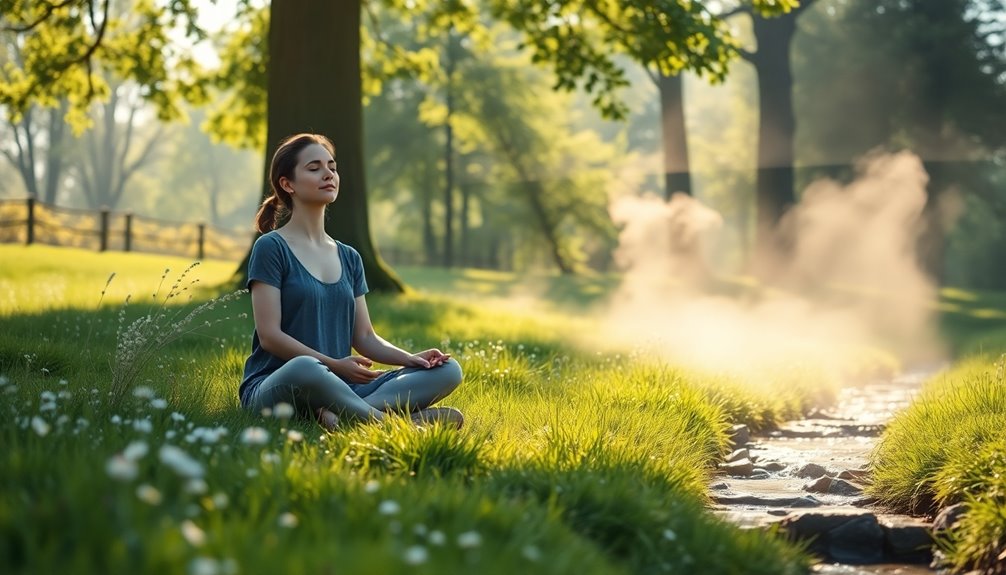
Mindful Practices That Reduce Everyday Stress
Mindful practices play an essential role in reducing everyday stress. Techniques like deep breathing and daily meditation help calm the mind and improve emotional balance. Incorporating mindful movement, such as yoga or tai chi, promotes physical and mental well-being. Creating a calming mindfulness space at home encourages relaxation and focus. Establishing a consistent routine guarantees these practices become habits. By exploring these methods, individuals can effectively manage stress and elevate overall quality of life. More insights await!
Article Highlights
- Practice deep breathing techniques to anchor thoughts and promote immediate calm during stressful moments.
- Engage in daily meditation to foster emotional balance and sustainable stress management over time.
- Incorporate mindful movement activities like yoga or Tai Chi to enhance emotional resilience and happiness.
- Create a calming mindfulness space with natural elements and soothing colors to promote relaxation and focus.
- Track progress through stress journaling to identify triggers and celebrate achievements in your stress management journey.
How Stress Affects Your Daily Life and What You Can Do About It
Stress can creep into daily life, often unnoticed until it’s too late. Common stress triggers, such as work deadlines and personal responsibilities, can lead to cognitive overload, impacting mental clarity and emotional resilience. Without effective coping strategies, individuals may find themselves overwhelmed, making lifestyle adjustments crucial. Implementing time management techniques can help prioritize tasks, reducing stress levels. Additionally, self-care practices, like regular exercise and healthy eating, can greatly improve overall well-being. Social support from friends and family plays an important role in combating stress, providing encouragement during tough times. Embracing mindfulness benefits, such as meditation or deep breathing, can promote emotional resilience, allowing individuals to navigate daily challenges with greater ease and balance. Furthermore, creating a stress-free workstation can significantly enhance focus and reduce distractions, contributing to a more balanced work life.
Deep Breathing Techniques for Instant Relaxation
In moments of tension, deep breathing techniques can serve as an effective tool for instant relaxation. By focusing on each breath, individuals can cultivate body awareness and create mindful pauses, allowing stress to dissipate. Here are four techniques that promote anxiety relief:
- Breath Counting: Count each deep breath to anchor thoughts and improve focus.
- Visualization Techniques: Envision a peaceful scene as you inhale deeply, encouraging instant calm.
- Stress Reset: Use deep breaths to reset your mind, clearing negative thoughts.
- Mindful Pauses: Integrate short breathing breaks throughout the day to maintain composure.
These methods not solely provide immediate relief but also empower individuals to manage stress more effectively in daily life.
How Daily Meditation Supports Stress Management
Even though many seek quick fixes for stress relief, daily meditation offers a deeper, more sustainable approach to managing anxiety. By integrating mindfulness benefits into a daily practice, individuals can experience significant stress reduction and improved emotional balance. Various meditation techniques, focusing on breathing awareness and self-reflection, promote mental clarity and inner peace. Over time, this practice enhances focus, allowing for a more centered approach to daily challenges.
| Meditation Technique | Benefits | Frequency |
|---|---|---|
| Mindfulness | Stress reduction | 10-20 minutes daily |
| Guided Visualization | Emotional balance | 3-5 times a week |
| Loving-Kindness | Improved compassion | Daily |
| Body Scan | Awareness of sensations | Weekly |
| Breath Counting | Focus improvement | Daily |
Make Mindful Movement Part of Your Day
Integrating mindful movement into daily routines can greatly improve overall well-being. Engaging in various forms of movement not only helps to relieve stress but also promotes body awareness. Here are some effective practices to incorporate:
- Mindful Walking: Focus on each step; feel the ground beneath your feet.
- Yoga Stretches: Pair rhythmic breathing with gentle stretches to release tension.
- Tai Chi: Embrace slow, deliberate movements to cultivate inner peace.
- Dance Therapy: Use playful movement to express emotions and uplift your spirit.
Incorporating these practices can be likened to how game development teams work collaboratively to enhance creativity and innovation. Whether it’s a nature hike or a spontaneous dance session, these activities allow individuals to connect mind and body, enhancing their emotional resilience and overall happiness.
Create a Calming Mindfulness Space at Home
Creating a calming mindfulness space at home can greatly improve one’s ability to reduce stress. It’s crucial to choose a quiet area, incorporate natural elements, and use soothing colors to promote tranquility. These elements work together to create an inviting environment for relaxation and reflection. Additionally, introducing air-purifying plants can enhance the atmosphere and improve indoor air quality, further supporting a serene space.
Choose a Quiet Area
Finding a quiet area in the home can greatly improve one’s mindfulness practice, as a peaceful environment promotes relaxation and focus. Creating this space not only boosts concentration but also enriches the sensory experience. Here are four ways to establish a calming area:
- Select a Low-Traffic Room: Choose a space away from daily hustle and bustle.
- Use Soft Lighting: Dim lights or candles can create a warm, inviting atmosphere.
- Incorporate Comfort Items: Add cushions or blankets to encourage relaxation.
- Minimize Distractions: Keep the space clutter-free to maintain a serene environment.
Incorporate Natural Elements
Even though it may seem simple, incorporating natural elements into a mindfulness space can greatly improve one’s sense of calm and connection to the environment. By integrating items like plants, stones, or water features, individuals can elevate their nature immersion, nurturing a serene atmosphere. Soft, natural lighting and open windows can additionally invite the soothing sounds of the outdoors, further promoting outdoor mindfulness. Creating a space that reflects the beauty of nature not just improves mental clarity but also encourages a deeper appreciation for the world outside. Each element can serve as a reminder to pause and breathe, allowing for a more grounded and tranquil experience. In the end, these natural touches transform an ordinary space into a sanctuary of peace.
Use Soothing Colors
Colors play an important role in shaping a calming mindfulness space at home. By grasping color psychology, one can create an environment that nurtures emotional responses aligned with relaxation and peace. Soothing palettes can transform a room into a sanctuary of visual tranquility. Here are four key colors to reflect on for ambiance creation:
- Blue: Evokes calmness and serenity, promoting relaxation.
- Green: Represents nature, offering a revitalizing and balanced atmosphere.
- Lavender: Instills a sense of tranquility, often associated with stress relief.
- Soft Neutrals: Create design harmony, providing a gentle backdrop that calms the mind.
Incorporating these colors can greatly improve the overall atmosphere, making a home a true haven of peace.
How to Make Stress Management Techniques a Daily Habit
To make stress management techniques a daily habit, starting with small steps is essential. By creating a routine and tracking progress, individuals can gradually integrate these practices into their lives. This approach not only encourages consistency but additionally builds confidence in their ability to manage stress effectively.
Start With Small Steps
Starting with small steps can make a significant difference in adopting stress management techniques as daily habits. By focusing on achievable goals, individuals find that small victories lead to gradual changes in their lives. Here are some simple practices to contemplate:
- Daily reminders: Set alerts to pause and breathe throughout the day.
- Positive affirmations: Begin each morning with a phrase that inspires confidence.
- Mindful scheduling: Allocate specific times for relaxation and reflection.
- Intentional pauses: Take short breaks to appreciate the present moment.
These small, consistent actions can transform stress management into a natural part of daily life, nurturing resilience and well-being. Embracing these habits encourages individuals to prioritize their mental health effectively.
Create a Routine
Creating a routine around stress management techniques not only promotes consistency but also embeds these practices into daily life. By integrating habit formation into daily schedules, individuals can establish morning rituals like gratitude journaling to start their day positively. Evening wind down sessions can help clear the mind, whereas flexibility practices such as yoga improve physical and mental well-being. Regular self-care breaks throughout the day provide necessary moments of relaxation, while a digital detox can reduce overwhelming stimuli. Nature walks offer a revitalizing escape, promoting mindfulness and connection with the environment. By making these practices routine, individuals cultivate a sustainable approach to managing stress, transforming beneficial techniques into lasting habits that nurture overall health.
Track Your Progress
Building a routine around stress management techniques lays a solid foundation for lasting change, but tracking progress is equally important for reinforcing these habits. By engaging in progress tracking, individuals can visualize their growth and stay motivated. Stress journaling serves as a potent tool for reflection, allowing one to identify patterns and triggers more clearly. Here are four ways to effectively track progress:
- Daily Reflections: Write down feelings and stressors each day to recognize trends.
- Set Milestones: Define specific goals and celebrate achievements along the way.
- Monthly Reviews: Assess overall progress to adapt techniques as needed.
- Visual Aids: Use charts or graphs to illustrate improvements, boosting motivation.
Embracing these practices can lead to profound, lasting change.
Frequently Asked Questions
Can Mindfulness Practices Improve My Sleep Quality?
Could mindfulness practices hold the key to better sleep? It’s a question that lingers, especially for those struggling with restless nights. Research suggests they can certainly improve sleep quality by incorporating relaxation methods and sleep techniques. By focusing on the present moment, individuals can quiet their minds, reducing anxiety and promoting deeper rest. As the tension fades, the promise of a peaceful night becomes more tangible, inviting a wave of serene slumber.
What Is the Best Time to Practice Mindfulness?
The best time to practice mindfulness is often during morning routines or evening reflections. In the morning, it sets a positive tone for the day ahead, helping to center thoughts and intentions. In the evening, it allows for a moment of calm and self-reflection, promoting relaxation before sleep. By incorporating mindfulness at these times, individuals can improve their overall well-being and cultivate a more balanced mindset throughout their daily lives.
How Long Should I Meditate Each Day?
Most experts suggest starting with just 5 to 10 minutes of daily meditation, especially for beginners. As one gets more comfortable with different meditation techniques, they might gradually increase the time to 20 or even 30 minutes. Consistency is key; it’s better to meditate a little each day than to have longer sessions sporadically. This daily meditation practice can lead to greater benefits over time, helping to cultivate a sense of calm and clarity.
Can I Practice Mindfulness While Doing Chores?
Yes, one can practice mindfulness in addition to doing chores. By engaging in mindful cleaning, individuals can transform routine tasks into a form of chore meditation. Instead of rushing through, they can focus on the sensations, sounds, and smells involved in the process. This approach not only makes chores more enjoyable but likewise helps cultivate a sense of presence and calm. It’s a simple way to integrate mindfulness into daily life without needing extra time.
Is Mindfulness Suitable for Children?
Isn’t it amazing how mindfulness can benefit children? Mindfulness is truly suitable for them, as it improves emotional regulation and attention focus, essential for children’s development. Mindfulness games can make learning fun, helping kids manage stress effectively. By incorporating these practices, children can cultivate self-awareness and resilience. Overall, introducing mindfulness early on sets a strong foundation for healthy emotional and mental habits throughout their lives.


